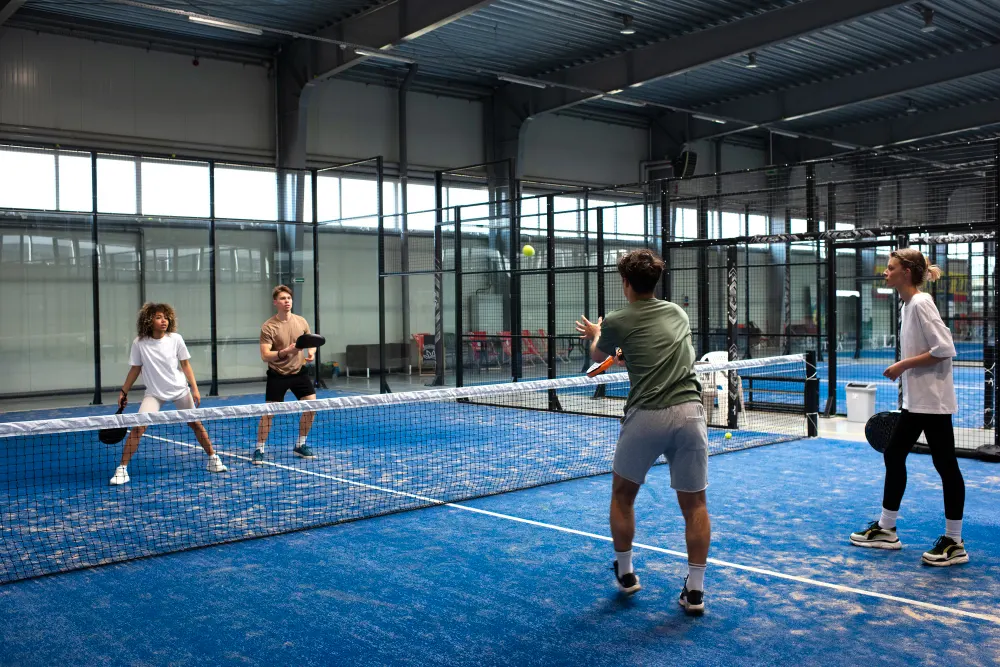
Padel is no longer just a niche sport—it’s rapidly gaining popularity across India, attracting sports enthusiasts, entrepreneurs, and real estate developers alike. As demand grows, so does interest in building high-quality padel facilities. But before stepping into this exciting venture, one key question arises: how much investment is actually required?
This guide breaks down everything you need to know about building a padel court in India in 2026—from dimensions and materials to cost factors and smart investment tips. Whether you’re planning a sports club, a private court, or a commercial facility, this blog will help you make informed decisions.
Understanding Standard Court Dimensions
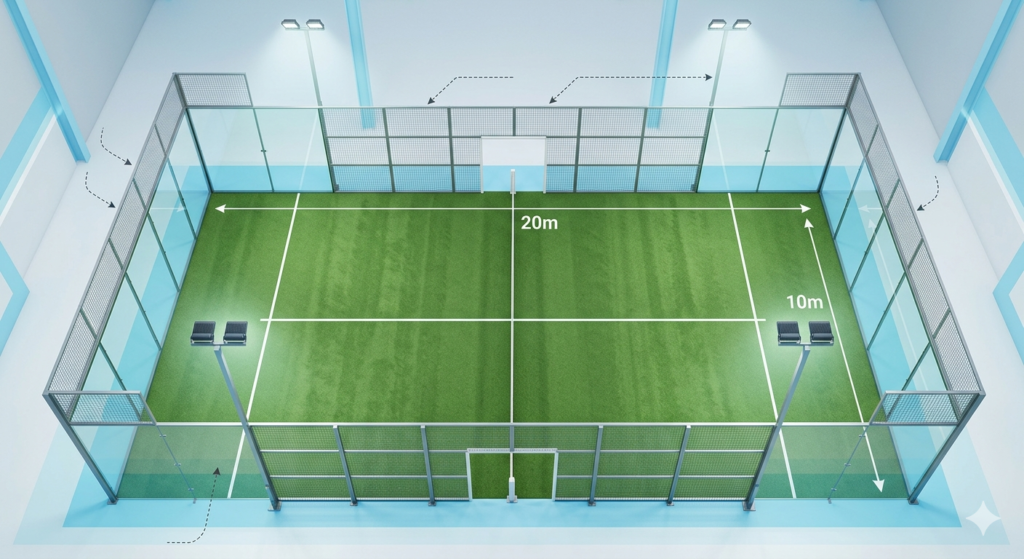
Before diving into costs, it’s important to understand the official size and layout of a padel court.
Standard Measurements
A professional padel court follows international specifications:
- Length: 20 meters
- Width: 10 meters
- Total Playing Area: 200 square meters
- Enclosure Height: Typically 3–4 meters (glass + mesh combination)
Key Structural Elements
- Glass Walls: Tempered glass panels at the back and partially on the sides
- Metal Mesh: Used for the remaining enclosure
- Synthetic Turf Surface: Specially designed for optimal ball bounce
- Lighting System: LED floodlights for evening play
Understanding these elements helps you estimate both space and cost more accurately.
What Influences the Cost of Construction?
The total investment required for building a padel court in India depends on several factors. It’s not a fixed number—your choices directly impact the budget.
1. Location & Site Preparation
- Urban areas may have higher land and labor costs
- Ground leveling, drainage, and foundation work add to expenses
- Indoor setups require additional structural support
2. Quality of Materials
- Premium tempered glass vs standard glass
- Imported vs locally manufactured turf
- Weather-resistant coatings and finishes
3. Type of Court
- Outdoor Courts: Lower initial cost but require weatherproofing
- Indoor Courts: Higher cost due to roofing and structure but allow year-round play
4. Lighting & Electrical Setup
- High-quality LED systems increase cost but reduce long-term electricity bills
- Smart lighting systems can enhance user experience
5. Branding & Customization
- Custom colors, logos, seating areas, and fencing designs
- Additional amenities like spectator zones or lounge areas
Estimated Investment Range in India (2026)
While prices can vary, here’s a realistic breakdown of padel court construction costs in India:
Basic Court Setup
- Approx. ₹13–17 lakhs
- Suitable for entry-level or recreational use
- Standard materials with minimal customization
Mid-Range Professional Court
- Approx. ₹14–20 lakhs
- Better turf quality, stronger structure, improved lighting
- Ideal for clubs and academies
Premium or Tournament-Level Court
- Approx. ₹15–25+ lakhs
- International-grade materials
- Enhanced durability and aesthetics
- Suitable for commercial sports complexes
Detailed Cost Breakdown
Here’s how your budget typically gets distributed:
1. Civil Work & Foundation (20–25%)
- Ground leveling
- Concrete base
- Drainage system
2. Glass & Structural Framework (25–30%)
- Tempered glass panels
- Steel structure and mesh fencing
3. Turf Installation (15–20%)
- Artificial grass
- Sand infill
- Shock absorption layers
4. Lighting System (10–15%)
- LED floodlights
- Wiring and electrical setup
5. Miscellaneous Costs (10–15%)
- Transportation
- Installation labor
- Branding and finishing touches
Additional Features That Add Value
To stand out in a competitive market, many developers go beyond basic construction.
Popular Add-ons:
- Digital Booking Systems
- Seating & Viewing Areas
- Changing Rooms & Showers
- Cafeteria or Lounge Spaces
- Coaching Facilities
These features not only enhance user experience but also increase revenue potential.
Return on Investment (ROI): Is It Worth It?
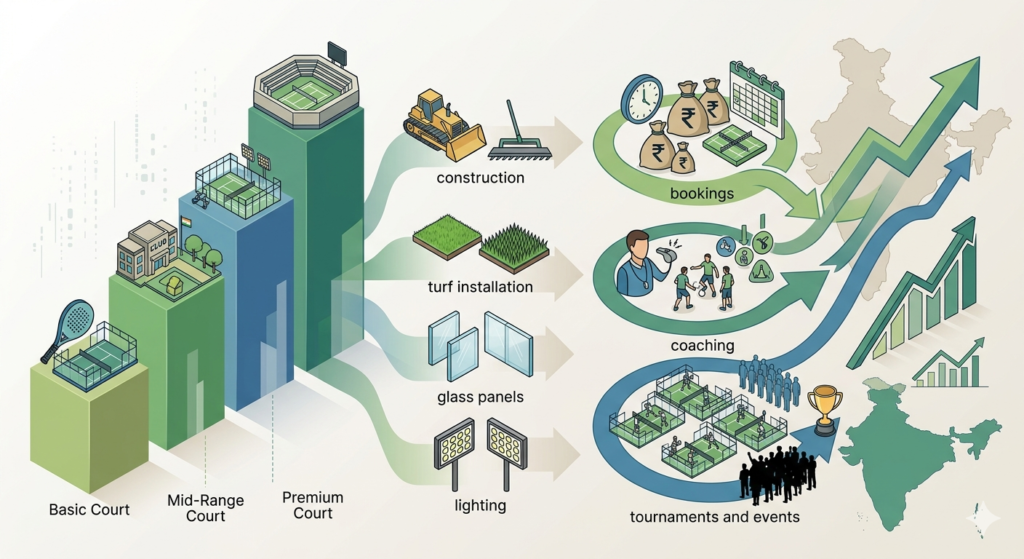
Padel courts are considered a high-potential investment in India, especially in metro cities and premium residential areas.
Revenue Streams
- Hourly court bookings
- Membership plans
- Coaching sessions
- Tournaments and events
- Brand sponsorships
Example ROI Scenario
- Average booking rate: ₹1500–₹3,500 per hour
- Daily usage: 6–10 hours
- Monthly revenue potential: ₹1.5–4 lakhs (per court)
With proper management and marketing, investors can recover costs within 2–3 years.
Practical Tips Before You Start
Choose the Right Location
Focus on areas with:
- High footfall
- Sports culture
- Residential or corporate hubs
Work with Experts
Partner with experienced padel court builders who understand:
- International standards
- Indian climate conditions
- Long-term durability
Focus on Quality Over Cost
Cutting corners on materials may reduce initial investment but increases maintenance costs later.
Plan for Maintenance
Regular upkeep ensures:
- Better player experience
- Longer lifespan of the court
- Strong brand reputation
Why Padel is a Smart Investment in 2026
India’s sports industry is evolving, and padel is perfectly positioned to ride this wave.
Key Growth Drivers
- Increasing fitness awareness
- Rise of social sports culture
- Low learning curve for beginners
- Strong appeal among young professionals
As awareness grows, early investors stand to benefit the most.
Conclusion
Building a padel court in India is more than just a construction project—it’s an opportunity to tap into a fast-growing sports market. While the investment can vary depending on quality, location, and features, the long-term returns and business potential make it a worthwhile venture. By understanding the dimensions, cost structure, and strategic planning involved, you can create a facility that not only meets professional standards but also attracts consistent players and revenue. If approached correctly, a padel court isn’t just an expense—it’s a profitable and future-ready investment.
Contact us today to get expert guidance and start planning your padel court project with confidence.