Padel is quickly becoming one of the most exciting sports trends in India, attracting players of all age groups and skill levels. As clubs, real estate developers, and sports enthusiasts look to build new facilities, one of the most common questions is: how much space is actually required?
While a padel court may appear compact compared to other sports like tennis, proper planning goes far beyond just fitting the playing area. From safety zones to spectator space and future expansion, understanding space requirements is essential for building a functional and profitable facility.
This guide will walk you through everything you need to know about planning space for padel courts in India, helping you avoid costly mistakes and make smarter decisions.
Standard Court Size: The Starting Point
Before considering additional space, it’s important to understand the official dimensions of a padel court.
Official Court Dimensions
- Length: 20 meters
- Width: 10 meters
- Total Playing Area: 200 square meters
This rectangular space is enclosed by glass walls and metal mesh, which are integral to how the game is played. Unlike tennis, the ball can bounce off the walls, making enclosure design just as important as the court surface.
Why You Need More Than Just the Court Area
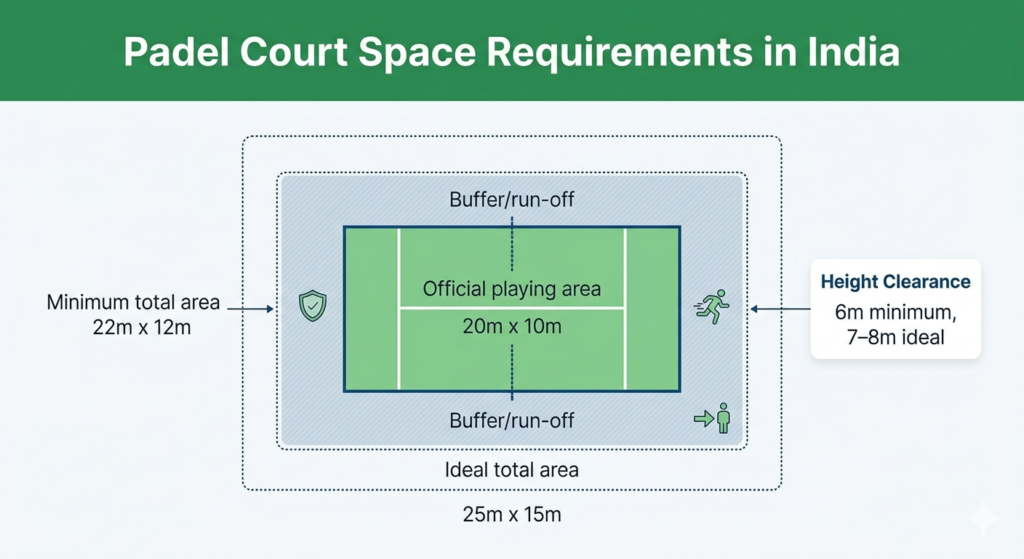
A common misconception is that you only need 20m x 10m space. In reality, that’s just the playing area—not the full footprint required for construction and usability.
Additional Space Requirements Include:
- Run-off Areas: For player safety and movement
- Access Paths: Entry and exit points
- Structural Support: Space for fencing and glass installation
- Maintenance Access: For cleaning and repairs
Recommended Total Space
To build a comfortable and professional setup, you should plan for:
- Minimum Area: 22m x 12m
- Ideal Area: 25m x 15m
This extra space ensures better player experience and compliance with international standards.
Height Clearance: An Overlooked Factor
While ground space is crucial, vertical clearance is equally important—especially for indoor courts.
Recommended Height
- Minimum Height: 6 meters
- Ideal Height: 7–8 meters
This allows players to execute lobs and high shots without obstruction. Insufficient height can negatively affect gameplay and limit the court’s usability for professional matches.
Space Planning for Different Types of Projects
The amount of space you need will vary depending on your project type and goals.
1. Single Court Setup
Perfect for:
- Private properties
- Small clubs
- Hotels or resorts
Space Needed:
- Around 25m x 15m (including buffer zones)
2. Multi-Court Facility
Ideal for:
- Sports academies
- Commercial clubs
- Tournament venues
Space Considerations:
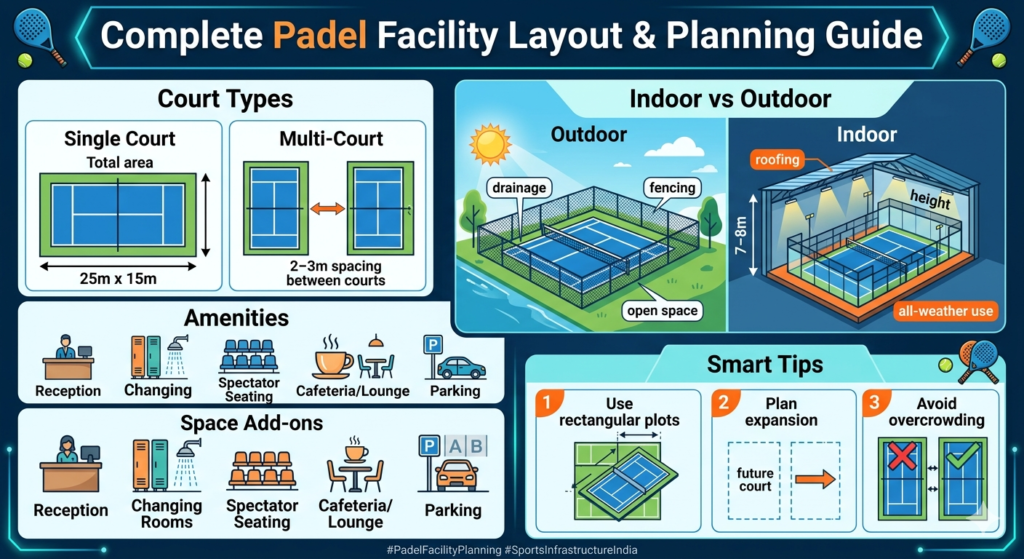
- Leave at least 2–3 meters between courts
- Plan shared walkways and seating areas
- Ensure proper lighting layout for all courts
3. Indoor vs Outdoor Layouts
Outdoor Courts
- Require drainage planning
- Need space for fencing and wind resistance
- Easier to install in open plots
Indoor Courts
- Require structural roofing
- Need higher ceiling clearance
- Offer year-round usability
Smart Layout Tips for Maximum Efficiency
Optimizing your available land is key, especially in urban areas where space is limited.
Practical Tips:
- Use Rectangular Plots Efficiently: Align courts parallel to maximize space
- Plan Entry Points Carefully: Avoid congestion during peak hours
- Integrate Seating Areas: Even small viewing zones add value
- Allow for Expansion: Keep space for future courts or amenities
Additional Space for Amenities
If you’re building a commercial facility, the court alone won’t be enough to attract and retain players.
Consider Including:
- Reception Area: For bookings and management
- Changing Rooms: Essential for player comfort
- Spectator Seating: Enhances the experience during matches
- Cafeteria or Lounge: Increases revenue potential
- Parking Space: Crucial for accessibility
Suggested Extra Area
- Basic Facility Add-ons: 500–1,000 sq. ft.
- Premium Club Setup: 2,000+ sq. ft.
Common Mistakes to Avoid
Proper planning can save you from expensive corrections later. Here are some mistakes to watch out for:
1. Ignoring Buffer Zones
Skipping extra space around the court can lead to safety issues and poor gameplay.
2. Underestimating Height Requirements
Low ceilings can make indoor courts unusable for serious players.
3. Poor Drainage Planning
Especially for outdoor courts, improper drainage can damage turf and reduce court lifespan.
4. Overcrowding Multiple Courts
Trying to fit too many courts in a small area reduces player comfort and overall experience.
Why Proper Space Planning Matters
Investing in the right amount of space isn’t just about compliance—it directly impacts your success.
Benefits of Good Planning:
- Better player safety and comfort
- Enhanced playing experience
- Higher customer retention
- Increased revenue opportunities
- Easier maintenance and operations
A well-planned facility also builds a strong brand image, making it more attractive for tournaments and partnerships.
Future Trends in Padel Infrastructure in India
As the popularity of padel grows, facilities are becoming more advanced and user-focused.
Emerging Trends:
- Compact Urban Courts: Designed for smaller spaces in cities
- Rooftop Installations: Maximizing unused real estate
- Multi-Sport Complexes: Combining padel with other activities
- Tech-Enabled Courts: Smart booking and performance tracking
Planning your space with these trends in mind can give you a competitive edge.
Conclusion
Building a padel court in India is an exciting opportunity, but it requires thoughtful space planning to ensure long-term success. While the standard court size is fixed, the surrounding space you allocate plays a crucial role in safety, usability, and overall experience.
By considering factors like buffer zones, height clearance, amenities, and future expansion, you can create a facility that stands out in a growing market. Whether you’re building a single court or a full-scale sports complex, the right planning today will lead to better returns tomorrow.
A well-designed padel setup isn’t just about fitting a court into a space—it’s about creating an environment where players want to come back again and again. Contact us now!